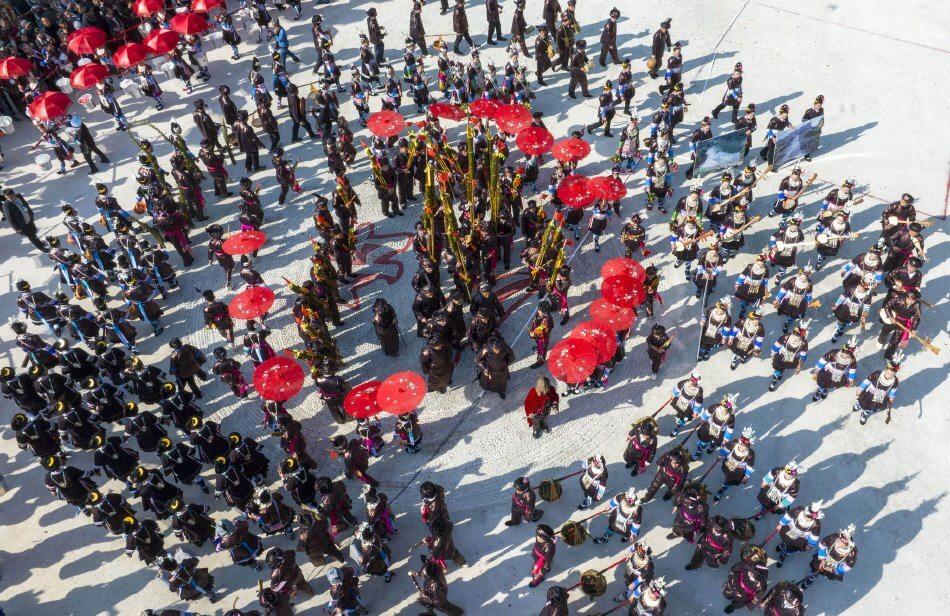
The crisp winter air of the Qiandongnan highlands carried the distant, haunting melodies of lusheng (reed-pipe wind instruments) and the rhythmic, synchronized stamping of feet on December 1st, 2025. In Qingyun Town, Congjiang County, the local Dong community, joined by eager neighbors and travelers, ushered in their annual Dong Frozen Fish Festival (Dòng Yú Jié)—a vibrant testament to cultural resilience and communal joy held deep within Guizhou’s picturesque landscape.
More than just a culinary event named for its signature dish—dongyu, a savory, gelatinous fish preparation cherished in winter—the Frozen Fish Festival 2025 served as a dynamic, open-air museum of Dong traditions. This year’s gathering transformed the town into a pulsating hub of ethnic culture in Guizhou, where the primary mission was clear: to transmit national traditional culture through immersive, generation-spanning participation.
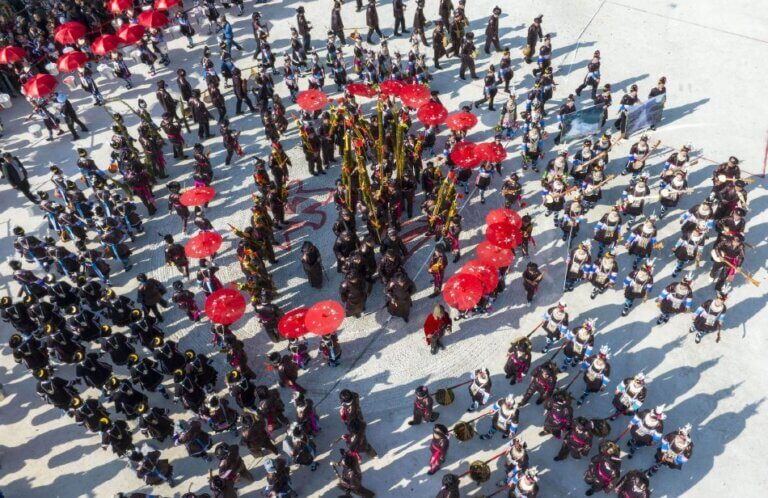
The day commenced with a spectacular Intangible Cultural Heritage Parade. Elders adorned in hand-stitched, indigo-dyed Dong traditional attire, their garments shimmering with intricate silver ornaments, led a procession showcasing symbols of Dong life. Embroidered motifs depicting fertility and prosperity fluttered in the breeze. Following them, teams of bearers carried models of the iconic Dong Drum Towers and Wind-and-Rain Bridges, architectural marvels synonymous with Dong ingenuity. This moving tableau was not merely a display but a narrative—a storytelling walk through history, emphasizing Guizhou traditional festival preservation.
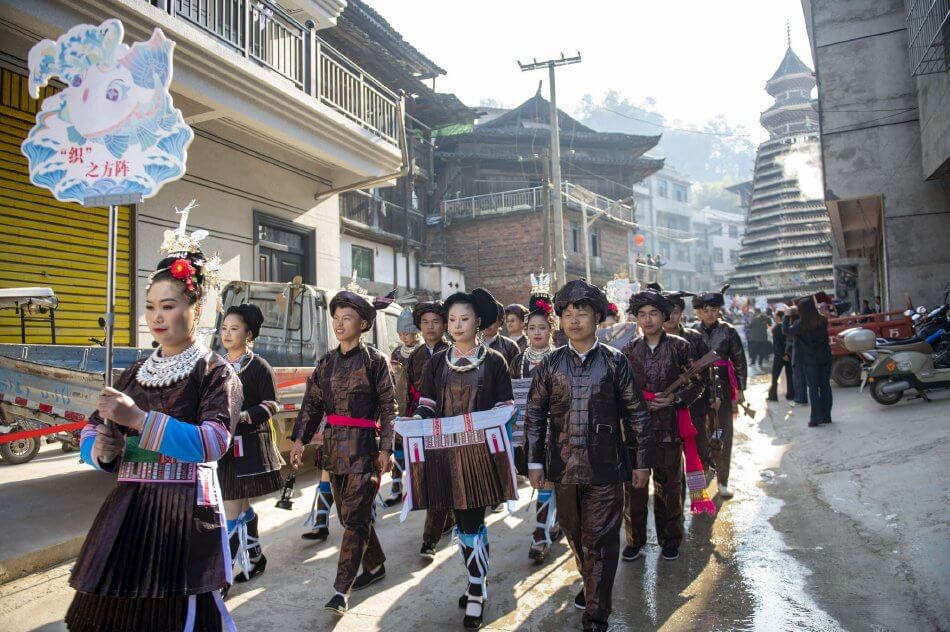
The parade seamlessly flowed into the festival’s emotional and social core: the Caige Tang (Cǎi Gē Táng), or “Stepping Song Hall.” This is where the soul of the Dong people found its voice and movement. In the town’s central square, hundreds of Dong villagers, predominantly women, formed concentric circles. Linking little fingers, they began a slow, graceful, yet powerful shuffling dance. Their steps, though seemingly simple, were precise and centuries old, each shift in pattern telling of harvests, love, and ancestral wisdom. The true magic, however, resided in the polyphonic chorus of Dong Grand Songs (Dà Gē), a UNESCO-listed intangible cultural heritage. Without instrumental accompaniment or a lead singer, multiple vocal parts—from resonant basses to ethereal, falsetto trebles—wove together in a complex, harmonious tapestry mimicking the sounds of nature: babbling brooks, rustling forests, and cicadas in summer. For visitors witnessing Dong ethnic celebrations for the first time, the Caige Tang was a mesmerizing immersion into a living, breathing musical heritage.
Simultaneously, the air vibrated with the energetic hum of the Lusheng Competition. Lusheng teams from surrounding townships, Liping County, and even neighboring Guangxi province converged, turning a friendly contest into a regional cultural exchange. Each team, with men blowing on their towering, bamboo lusheng and women dancing in synchronized patterns, performed pieces ranging from solemn, ancient tunes to lively, modern adaptations. The sound—a deep, reedy, and rhythmic roar—was the festival’s powerful heartbeat. The competition highlighted not just musical skill but also the Lusheng culture as a social glue, fostering unity and friendly rivalry among Dong communities across provincial borders.
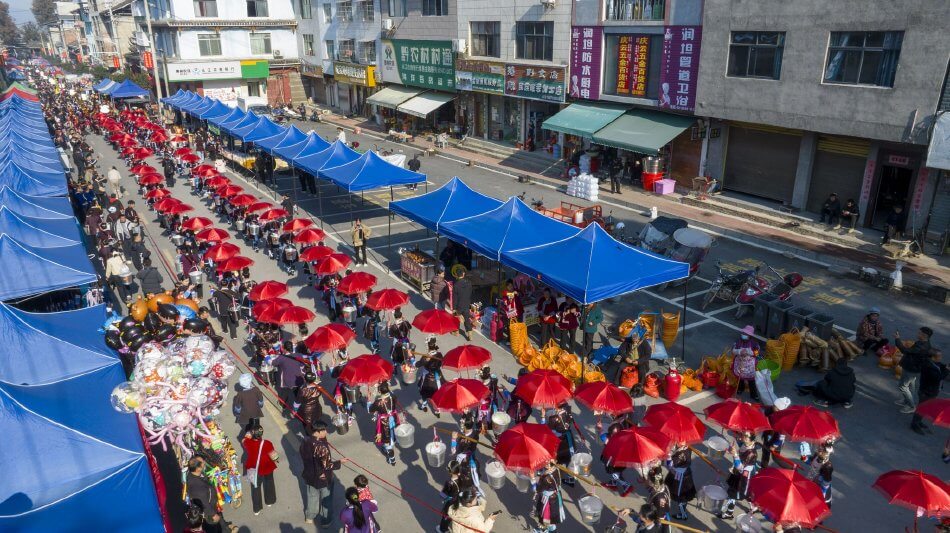
Beyond the song and dance, the festival was a sensorial feast. The aroma of the festival’s namesake—dongyu—wafted from food stalls. This traditional dish, prepared by simmering fish with spices, vegetables, and sour broth until it cools into a flavorful, aspic-like consistency, represents the Dong people’s wisdom of winter preservation and communal dining. Visitors queued to taste this and other local specialties, connecting with Dong culture directly through their palate.
For the SEO-focused traveler seeking an authentic ethnic travel experience in China, the 2025 Frozen Fish Festival was a prime destination. It offered profound cultural tourism opportunities far from commercialized performances. Here, participation was encouraged; visitors found themselves gently pulled into the dancing circles, taught a few steps, and offered cups of fragrant youcha (oil tea). This community-based tourism model ensured that the economic benefits of increased visitation—from neighboring areas and Guangxi tourists—flowed directly to local households, incentivizing the continued practice of their heritage.
As dusk settled over the terraced hills surrounding Qingyun Town, the festivities gradually wound down. The final echoes of the lusheng faded, and the last verses of the Grand Songs dissolved into the chilly evening. The Frozen Fish Festival 2025 had once again fulfilled its profound purpose. It was more than a day of revelry; it was a powerful, collective act of cultural confidence. In the face of a rapidly modernizing world, the Dong people of Qingyun, alongside their guests, had spent a day dancing their history, singing their values, and sharing their table. They demonstrated that tradition is not a static relic but a vibrant, evolving force—a flame kept alive in the winter cold through the warmth of community, the rhythm of shared steps, and the unforgettable harmony of voices united in song.