The Symphony of Slurps: A Love Letter to Suzhou’s Noodle Culture
If noodles were poetry, Suzhou’s would rhyme with the soft lilt of the Wu dialect. Here, every strand tells a story—of silk merchants fueling their barter with steaming bowls, of canal-side chefs perfecting broths over charcoal fires. Let’s wander beyond the guidebooks and into the tangmian (noodle shop) alleys where umami dances on your tongue.
Chapter 1: The Noodles That Built a City
1. Duruo Mian: The Breakfast of Scholars
At 6 AM, locals queue for this milky-white broth, crowned with tender pork belly marinated in rice wine. Legend claims 18th-century scholars devoured it before imperial exams. Today, a bowl costs 2.5–4 at Yuanyuan Tangmian, where the owner still uses a 100-year-old recipe.
2. Sanxia Mian: A Summer Romance
From May to June, shrimp roosters (tiny river shrimp) flood Suzhou’s canals. Chefs toss their eggs, meat, and tails into a glossy sauce poured over wheat threads. At 8–12 per plate, Lüyang Pavilion serves it with a side of Taihu Lake breeze.
3. Aozhao Mian: The Spice Trail
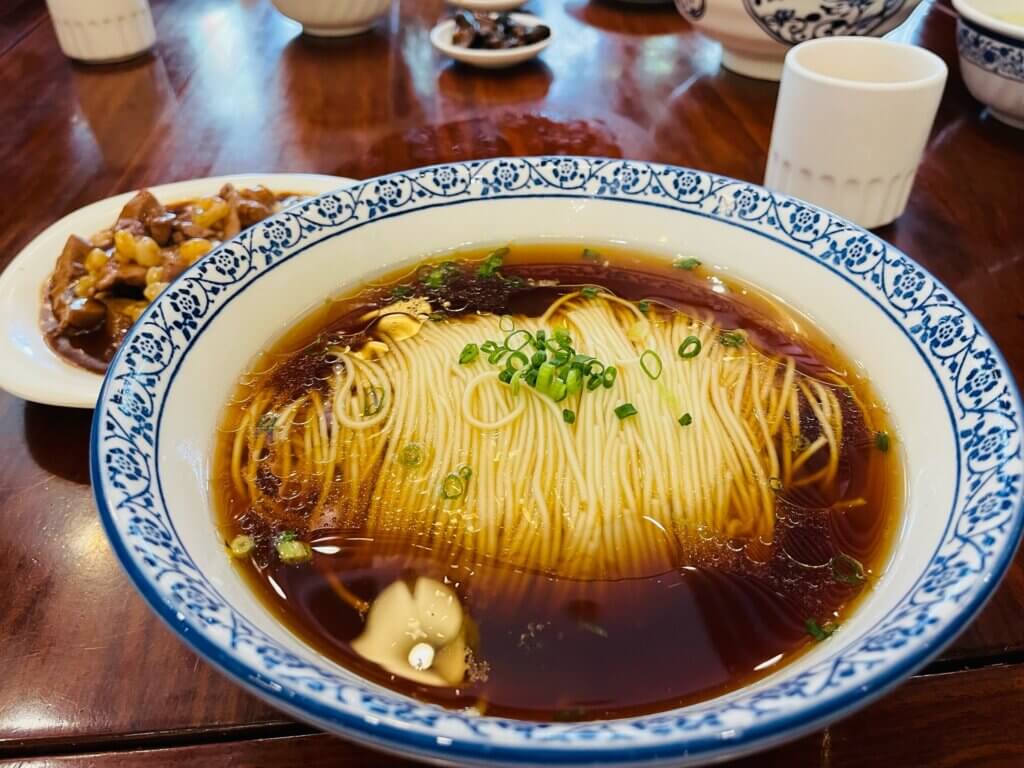
Don’t let the murky broth fool you—this dark horse blends soy sauce, eel bones, and a whisper of star anise. Best enjoyed at Songhelou ($3.5) with pickled radish, it’s the noodle equivalent of a jazz riff: unexpected, addictive.
Chapter 2: Three Rules to Eat Like a Local
Rule 1: Timing is Everything
Suzhou’s noodle shops operate on a kai guan men (open-close) rhythm. Arrive at 7 AM for Duruo Mian, or miss it by 9:30 when the broth runs out. Late risers? Head to Xingji Tangmian after 2 PM for their legendary “second batch” of noodles ($3), simmered longer for extra chew.
Rule 2: The Art of the Slurp
A local proverb warns: “Silent noodles, joyless soul.” Lean close to the bowl, inhale the aroma, and slurp—this aerates the broth, releasing hidden flavors. Bonus: It cools the noodles, sparing your tongue from burns.
Rule 3: Skip the Chopstick Taboo
Unlike northern China, Suzhou encourages stabbing noodles with chopsticks—a practicality born of slippery, thin strands. Just avoid crossing them on the bowl; it’s a funeral symbol.
Chapter 3: Hidden Alleys, Big Flavors
Pingjiang Road’s “Noodle Whisperer”
Tucked behind a silk umbrella shop, Lao Fan’s Kitchen ($4) serves Huangyu Mian—yellow croaker noodles. The fish is deboned tableside, its sweetness contrasting with pickled mustard greens.
Shantang Street’s Midnight Noodles
At Ye Lao’s Stall (open till 1 AM), $5 buys a bowl of Chunlai Mian with bamboo shoots so fresh, they crunch like autumn leaves. Pair it with osmanthus wine—the owner’s secret hangover cure.
Epilogue: A Noodle Lover’s Budget
- Street Eats: 2–5 per bowl
- Mid-Range: 6–10 (adds sides like braised pork or century egg)
- Luxury: 12–15 for seasonal specialties (e.g., crab roosters in October)
Pro tip: Skip the touristy Guanqian Street. Locals swear by Fengzhen Laomian near Tiger Hill, where $3.5 buys a century of flavor.